
The relationship between physical posture and mental function extends far deeper than most people recognize. A yoga instructor specializing in mind-body integration demonstrates how spinal alignment directly influences cognitive performance, emotional regulation, and psychological wellbeing. Her teaching reveals that optimizing back health yields mental benefits alongside physical improvements, creating compelling additional motivation for prioritizing spinal care.
This expert’s approach centers on understanding the bidirectional relationship between physical structure and mental state. Physical posture influences mental function through multiple mechanisms while mental/emotional states simultaneously influence postural patterns, creating feedback loops that either support or undermine wellbeing depending on their direction. Understanding these connections enables conscious intervention to establish positive feedback loops supporting both physical and mental health.
The instructor emphasizes several key mechanisms linking posture to mental function. First, posture directly influences breathing patterns, which profoundly affect autonomic nervous system balance and mental state. Collapsed posture restricts breathing depth, forcing shallow, rapid breathing that activates stress responses and reduces oxygenation supporting cognitive function. Upright posture enables deep, slow breathing that promotes parasympathetic activation, supporting calm, focused mental states. Second, chronic pain from poor posture demands attention, reducing cognitive resources available for other tasks and limiting working memory capacity, problem-solving ability, and creativity. Third, embodied cognition research demonstrates that physical postures directly influence psychological states through proprioceptive feedback to the brain—upright, open postures increase confidence and positive emotion while collapsed postures increase negative emotion and reduce self-efficacy. Fourth, postural patterns influence hormone levels including cortisol and testosterone, with upright postures associated with more favorable hormone profiles supporting stress resilience and wellbeing.
The cognitive performance implications prove particularly significant for knowledge workers whose livelihoods depend on mental capability. Poor posture reduces oxygenation through restricted breathing, limiting the oxygen delivery supporting optimal brain metabolism. Postural pain creates distraction and consumes cognitive resources otherwise available for productive mental work. The psychological effects of collapsed posture—reduced confidence, increased negative emotion—create mental states poorly suited for creative thinking, problem-solving, and collaborative work requiring confident engagement.
The emotional regulation implications extend beyond immediate mood effects to influence stress resilience and psychological wellbeing over time. Individuals maintaining upright, open postures demonstrate better stress resilience, faster emotional recovery from negative events, more positive overall mood, and greater psychological wellbeing across multiple measures. The mechanisms likely involve both the physiological effects of breathing patterns and autonomic balance plus the psychological effects of embodied cognition where physical confidence postures genuinely influence psychological confidence states.
The instructor provides practical interventions optimizing the posture-mind connection. Her postural protocols establish physical alignment supporting optimal mental function. The standing sequence involves five systematic steps: weight on heels, chest lifted, tailbone tucked, shoulders back with loose arms, chin parallel to ground. This alignment enables full breathing capacity while creating the open, upright physical presence associated with positive psychological states. Implementing this reset during work breaks provides both physical relief and mental refreshment, interrupting accumulated physical and mental stress while actively promoting positive feedback loops between physical and mental states.
The strengthening exercises build the physical capacity enabling sustained optimal positioning without fatigue that would force return to collapsed postures. The first wall-based exercise develops posterior chain endurance—standing at arm’s distance from a wall, placing palms high, allowing torso to hang parallel to ground with straight legs, holding one minute or longer. The second builds dynamic strength and mobility—standing near a wall, lifting one arm in a circle above the shoulder, returning to start, then extending the arm horizontally while rotating the torso to bring it back as far as possible, holding one minute or longer per side. Beyond their direct physical effects, these exercises provide mindful movement practice that itself supports mental clarity and emotional regulation through focused attention to present moment physical experience.
By recognizing and actively working with the posture-mind connection, individuals can leverage physical interventions to support mental function and psychological wellbeing, creating synergistic improvements where physical and mental health mutually reinforce each other through conscious attention to the body’s architectural foundation.
The Mental Clarity-Posture Connection: Why Your Spine Affects Your Mind
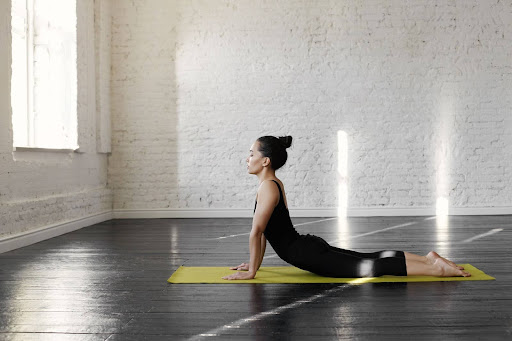
Picture Credit: www.freepik.com
101