President Donald Trump has sent a tremor through the global trading system by announcing a “final and conclusive” 25% tariff on any nation maintaining business ties with Iran. This sweeping economic directive, issued via Truth Social, was marked by its immediacy and severity. “Effective immediately,” the President declared, nations such as China, India, and the United Arab Emirates face a steep penalty on their exports to the United States if they do not sever their economic lifelines to Tehran. The move is a calculated escalation designed to financially isolate the Iranian regime during its most vulnerable moment in decades, as it battles a massive internal uprising that has already claimed hundreds of lives.
The backdrop to this economic shock is a deepening humanitarian crisis within Iran. Security forces have launched a brutal crackdown on anti-government protesters, with reports confirming at least 648 deaths and over 10,600 arrests. The regime has resorted to cutting off internet and phone lines to mask the violence, but the evacuation of French diplomatic staff suggests that the situation is spiraling out of control. Trump has positioned the United States as the avenger of the Iranian people, using the immense leverage of the American market to punish the regime’s enablers. By forcing global powers to choose between the Iranian economy and the U.S. economy, Trump is betting that financial self-interest will override diplomatic alliances.
China has reacted with predictable fury to the announcement. Beijing denounced the tariffs as “long-arm jurisdiction” and “illicit,” warning that such coercion would not solve the underlying problems. The Chinese embassy in Washington emphasized that trade wars have no winners, signaling a potential retaliatory cycle that could harm the global economy. However, the Trump administration appears unmoved by these warnings, viewing the economic pressure as a necessary tool to confront a rogue regime. The friction between Washington and Beijing over this issue highlights the increasing weaponization of trade policy in 21st-century geopolitics.
While the tariffs grab headlines, the White House is also engaged in a high-stakes game of military signaling. Press Secretary Karoline Leavitt confirmed that airstrikes are among the “many, many options” currently on the President’s desk. This military threat, combined with the economic strangulation, is intended to force the Iranian leadership into a corner. Leavitt also noted that the regime’s private messages to the U.S. differ significantly from their public defiance, suggesting that the pressure campaign is generating internal fractures within the Iranian establishment.
As the U.S. Supreme Court reviews the constitutional limits of Trump’s tariff authority, the executive order remains the law of the land. Global businesses are now scrambling to audit their supply chains and assess their exposure to the new penalties. The 25% tariff represents a significant barrier to entry for any country that refuses to fall in line with U.S. foreign policy. Whether this bold move will lead to the collapse of the Iranian regime or merely a fracture in the global trading order remains the defining question of Trump’s second term.
Trump Shakes Global Trade: “Final” 25% Tariff on Iran’s Partners
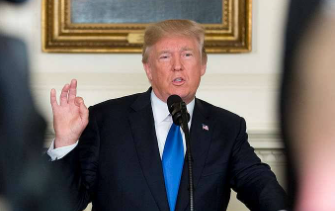
Picture Credit: www.picryl.com
52