
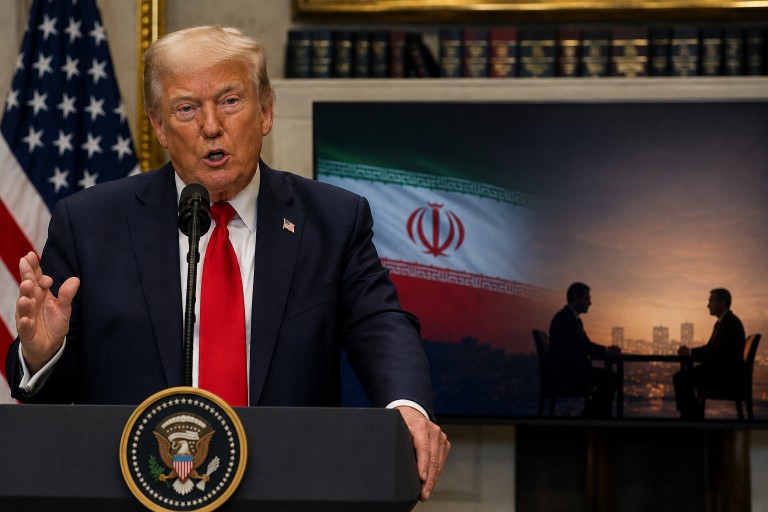
Tensions continue to simmer between the United States and Iran, with recent developments highlighting the delicate balance of power in the Middle East. President Donald Trump announced that the U.S. had called off a planned military strike against Iran, citing assurances that discussions were making progress toward a framework agreement. This accord aimed to address issues surrounding Iran’s nuclear program and ensure the reopening of the critical Strait of Hormuz for international shipping.
Trump’s decision to halt the military action reportedly came after appeals from Iran and other nations in the region, with Israel expressing support for the move. The Strait of Hormuz, a strategic chokepoint for global oil shipments, has been a focal point of these tensions. Any disruption in this vital waterway has the potential to impact global energy markets significantly.
However, Iran has flatly denied President Trump’s assertion that it sought the cancellation of the attack. Iranian officials labeled the claim as false, maintaining that their military forces remain vigilant and prepared for any potential aggression. They warned that any military intervention by the U.S. or its allies, including Israel, would meet with a robust response. Such retaliation could target critical energy infrastructure in the region, raising the stakes for all parties involved.
The ongoing strain between the U.S. and Iran has kept the global energy sector on high alert. Concerns over the secure passage of oil through the Strait of Hormuz and the broader implications for regional security continue to loom large. The situation underscores the complex geopolitical dynamics at play and the potential for escalation if diplomatic efforts falter.