
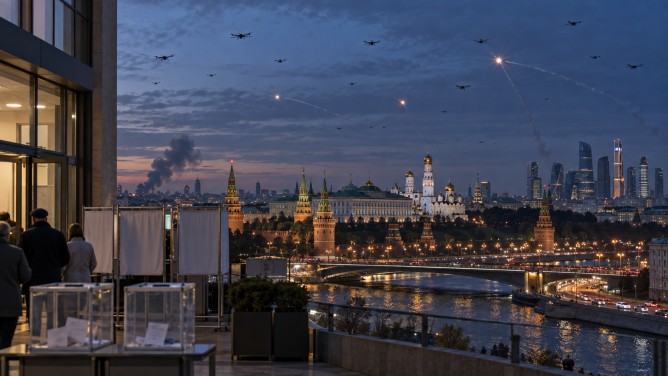
The conflict between Ukraine and Russia has seen a significant escalation, as Ukraine launched an extensive drone attack targeting various locations across Russia. This operation, which included the deployment of over 1,000 drones, marks one of the largest of its kind directed at Russian territory, specifically impacting the capital, Moscow, and surrounding areas.
In what Moscow Mayor Sergei Sobyanin described as the largest drone attack on the city, hundreds of drones were intercepted as they approached the capital. The assault resulted in damage to the Moscow Oil Refinery and a residential building, underscoring the strategic nature of the targets. In the broader Moscow region, local authorities reported two fatalities and 20 injuries as a consequence of the strikes.
Ukrainian President Volodymyr Zelensky confirmed that the operation utilized both drones and domestically produced weapons, with the intent to disrupt oil and logistics facilities that support Russia’s wartime economy. This development highlights the ongoing strategy of targeting infrastructure critical to military operations far from the front lines.
The timing of the attack coincides with the final day of Russia’s parliamentary elections, which have been extended to Ukrainian territories currently under Russian occupation. Kyiv has denounced these elections as illegitimate. Mayor Sobyanin accused Ukraine of attempting to interfere with the electoral process through these military actions.
Russia’s Defense Ministry reported that a total of 1,110 Ukrainian drones were neutralized across various regions, including Crimea and the Black Sea. This recent wave of attacks emphasizes the increasing use of long-range drones by both nations, as they continue to engage in a technological arms race to target each other’s strategic assets.