
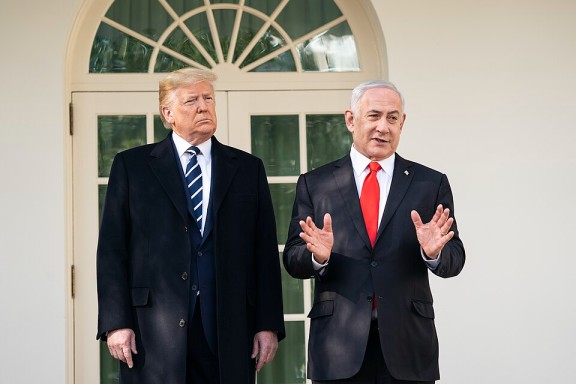
In a recent conversation between Israeli Prime Minister Benjamin Netanyahu and U.S. President Donald Trump, the two leaders discussed the potential renewal of military actions against Iran. The discussion, which took place on Sunday evening, also touched upon Trump’s recent visit to China. Following this call, Netanyahu planned to gather with top Israeli officials, including Foreign Minister Gideon Sa’ar and Defense Minister Israel Katz, for a security meeting in Jerusalem. These discussions were prompted by recent reports of escalating tensions, particularly after a drone attack on a nuclear power plant in the United Arab Emirates, a site that along with Israel had been targeted by Iran during their ongoing conflict.
While the United States and Iran have not made significant progress in negotiations since the April 8 ceasefire, Trump remains hopeful that Iran is still open to a deal. Despite this optimism, Trump issued a stern warning to Iran, urging swift action to avoid severe consequences. He emphasized the urgency of the situation in a social media post, stating, “For Iran, the Clock is Ticking, and they better get moving, FAST, or there won’t be anything left of them. TIME IS OF THE ESSENCE!” Meanwhile, Netanyahu expressed his readiness for any potential outcome, highlighting the importance of these discussions in light of Trump’s insights from his trip to China, which included a commitment from Chinese President Xi Jinping to assist in reopening the Strait of Hormuz.
Trump’s visit to China was part of a broader diplomatic effort, during which Chinese President Xi Jinping assured that China would refrain from providing military support to Iran. This assurance came as tensions continued to rise, with the United States and Israel reportedly preparing to resume military operations against Iran. As part of this preparation, Trump is set to convene with his national security team to explore military options. Despite the stalled negotiations, Trump remains confident that Iran will present a revised proposal soon and reiterated the possibility of harsher military action should Iran fail to comply with U.S. nuclear program demands.
In response to these developments, Iranian officials have issued warnings against renewed attacks, with armed forces spokesman Abolfazl Shekarchi cautioning Trump of “unprecedented, offensive, surprising, and tumultuous scenarios” if the U.S. resumes hostilities. Additionally, Iran has demanded the cessation of the U.S. naval blockade and the release of frozen Iranian assets as part of its proposal to end the conflict. However, Iranian media have criticized the U.S. for not offering tangible concessions, further complicating the negotiation process.
Amidst the diplomatic and military tensions, a drone strike near the Barakah Nuclear Power Plant in Abu Dhabi caused a fire, although no injuries or radiation threats were reported. The incident, which has been attributed to Iranian aggression by the UAE, has drawn condemnation from international figures like Rafael Grossi, head of the UN’s nuclear agency. As the situation unfolds, the UAE and Saudi Arabia have reportedly joined the United States and Israel in military actions against Iran, illustrating the complex and escalating nature of the regional conflict.