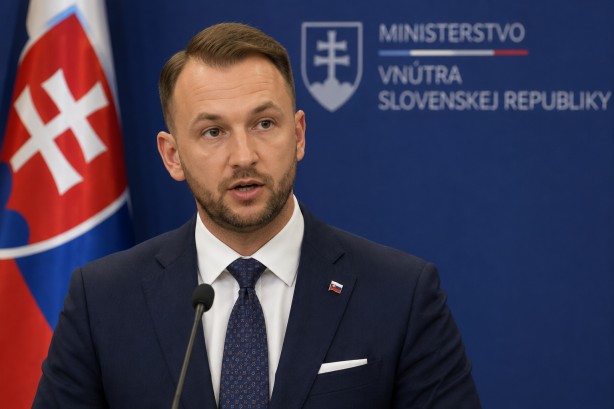
Slovak Interior Minister Matúš Šutaj Eštok has voiced concerns over what he describes as the European Union’s inconsistent approach towards assessing the rule of law in Hungary. During an appearance on Slovak television, Eštok highlighted the EU’s apparent silence regarding recent political changes under Hungary’s Prime Minister Péter Magyar, contrasting this with the EU’s historically stringent responses to similar situations.
Eštok pointed to several significant changes in Hungary, such as the dismissal of its president, amendments to the constitution, restrictions imposed on parliament members, and reforms within the public broadcasting sector. He contended that if former Prime Minister Viktor Orbán had implemented these measures, the EU might have reacted with more severe criticism and potentially even sanctions.
The Slovak Interior Minister also questioned the European Commission’s current stance, suggesting that recent developments in Hungary have not been subjected to the rigorous examination typically expected from EU institutions. This sentiment follows earlier remarks from Slovak Foreign Minister Juraj Blanár, who raised issues about constitutional reforms impacting the presidency, arguing that these changes do not align with the principles of rule of law.
These criticisms contribute to the ongoing discourse on how the European Union addresses democratic and legal issues within its member states, particularly focusing on Hungary. The scrutiny of the EU’s approach reflects broader concerns about the consistency and fairness of its actions regarding governance and legal standards across Europe.