
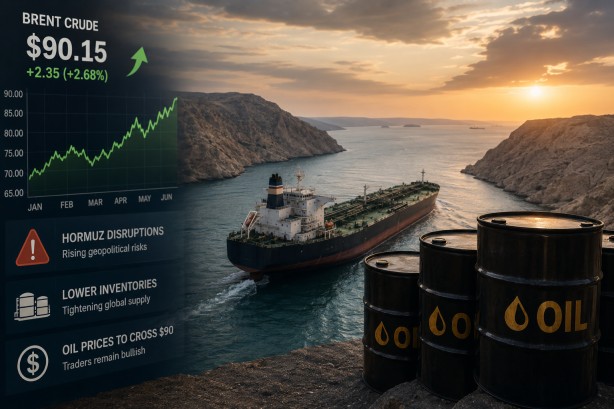
Oil prices have surged to their highest weekly gain since April, yet experts suggest that Brent crude will require either a sustained disruption in the Strait of Hormuz or definitive signs of a tightening global supply to exceed $90 per barrel. As of Friday, Brent crude hovered around $85 after an 11% increase over the week, while the U.S. benchmark, West Texas Intermediate, edged close to $80. This price spike comes amid escalating tensions between the United States and Iran, impacting key Middle Eastern oil routes and hindering tanker traffic through the strategic Strait of Hormuz.
Despite the rising geopolitical tensions in the region, Brent crude has been unable to surpass its weekly high of $87.55 per barrel. Market analysts point out that traders anticipate continued diplomatic efforts to avert a long-term crisis, which has tempered the oil price rally. The Strait of Hormuz remains a focal point for energy markets given its role as a conduit for approximately 20% of the world’s oil supply. The reduction in tanker movements has prompted shipping companies to keep a vigilant eye on the evolving security landscape.
The repercussions of these developments are already being felt in fuel markets globally. In the United States, refining margins have seen an uptick as diesel and gasoline supplies dwindle, while European fuel markets are also experiencing mounting pressure. Compounding these concerns are disruptions to Russian exports, which have further fueled apprehensions about the stability of global oil supplies.
Industry analysts assert that for oil prices to break decisively above the $90 threshold, there needs to be a marked decline in inventories or an escalation in the conflict between Washington and Tehran, which could lead to an extended halt in shipping activities through Hormuz. Until such scenarios unfold, traders are closely monitoring diplomatic efforts and supply data, which are expected to dictate the next significant movements in the global oil markets.